How to Tell If a YouTube Video Will Get Views (Before You Film)
A validated idea can still flop if the packaging doesn't earn the click. Here's how to predict whether a specific video will actually get views — before you spend a weekend making it.
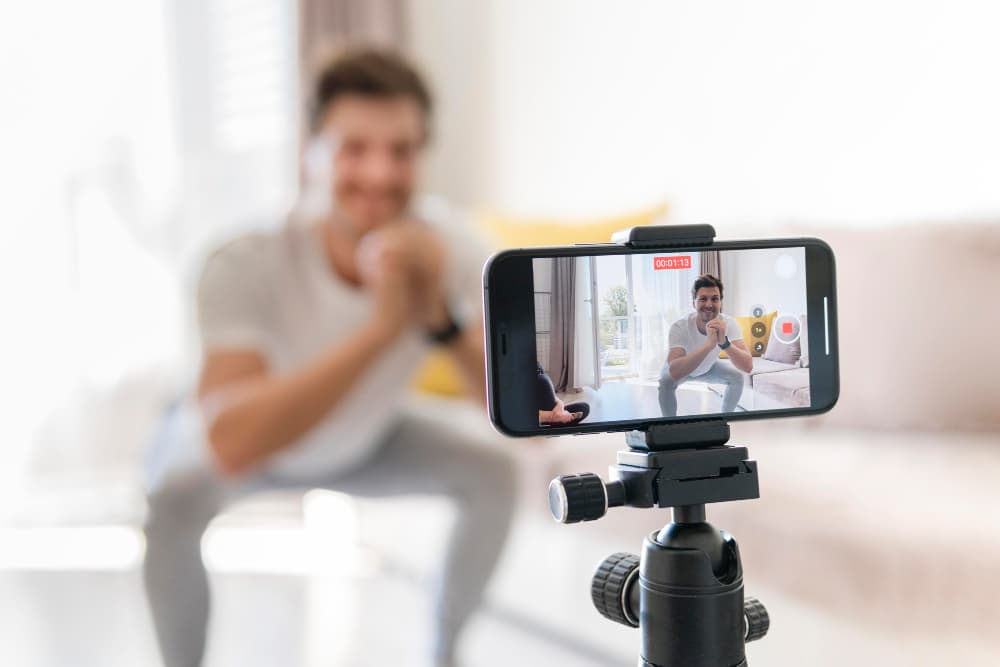
You can validate an idea and still make a video nobody clicks. Getting a topic in front of people is one thing; your specific video earning the click and holding attention is another. This guide is about that second question: given that the demand exists, is this particular video likely to get views?
It's the step after validating the idea. Validation confirms people want the topic; here you predict whether your packaging and angle will turn that demand into clicks and watch time — before you spend the weekend finding out. The validation step itself has a name and a method — the 4-Signal Idea Check — and this guide picks up where it leaves off.
Demand gets your video shown. Packaging decides whether it gets watched — and delivery decides whether it keeps being shown. A validated topic with a weak package often still underperforms.
Three factors that shape performance — a working model
There's no public formula for views, and YouTube doesn't literally multiply anything together. But as a mental model for creators, a video's reach tends to rise and fall with three things, and real weakness in any one tends to cap the rest:
- Demand — is the topic something people already want? (This is what validation answers.)
- Click appeal — does the title-and-thumbnail pair make someone choose your video over the others beside it?
- Delivery — once they click, does the video keep the promise the package made, so viewers stay and YouTube keeps recommending it?
It's a lens for spotting weakness before you film, not a score you can calculate — and the cheapest time to fix a weak video is while it's still an idea. The rest of this guide turns that lens into a repeatable process.
How to predict YouTube video performance before filming
Prediction here means a disciplined read of the odds, not a crystal ball. Run these seven steps on any planned video; each removes a common reason videos fail before you commit an hour of filming.
Step 1 — Start with a validated topic
Everything below assumes demand already exists — that you've confirmed people search for, watch, or ask about the topic. If you haven't, do that first with the four-signal check in how to validate a YouTube video idea. Performance prediction can't rescue a topic nobody wants; it only tells you whether your version of a wanted topic has a credible path.
Step 2 — Study the current search results
Search your topic the way a viewer would and read the first screen of results closely. You're not auditing competition in depth yet — that's how competitive a YouTube topic is — you're reading what the market already rewards. Note the recent videos and the older ones still pulling views, the size of the channels behind them, how each title is structured, the thumbnail patterns that repeat, the promise each one makes, and whether the same angle keeps appearing. The question to answer: what does this market reward, and where has no one delivered it well?
Step 3 — Build the title and thumbnail package
Design the package before you film, not after — it's the cheapest thing to change and the biggest lever you control. A quick process:
- Write 3–5 title concepts, not one.
- Sketch 2–3 thumbnail concepts (a rough description is enough).
- Pair titles and thumbnails together.
- Drop each pair into the row of real results you saw in Step 2.
- Ask which pair gives a viewer a concrete reason to choose it.
The title and thumbnail should add to each other, not say the same thing twice — the thumbnail shows the stakes or the outcome, the title names the specific promise.
Step 4 — Test differentiation
Answer one blunt question: why would someone choose my video instead of the five already on screen? Useful forms of difference include tighter specificity, a different audience, a fresher angle, a stronger or clearer promise, a sharper transformation, an unexpected comparison, a contrarian insight, or simply a better explanation of a problem everyone already has. But different is not automatically better: a weird angle nobody wants is still a weak bet — the difference has to be one viewers value.
Step 5 — Pressure-test the promise
A package sets an expectation; the video has to meet it. Trace the chain — title → thumbnail → opening → main payoff — and check it holds together. A package can earn the click and still underperform if the opening wanders, the payoff arrives late, or the video quietly delivers less than the title implied. If the promise and the payoff don't match, tighten the promise rather than overselling it.
Step 6 — Check delivery feasibility
Before filming, be honest about whether you can actually make the video the package sells. Ask: do I have enough knowledge or evidence to deliver this? Can I show the promised transformation, not just describe it? Is the payoff clear? Can the first 30–60 seconds confirm the premise? And the trap: am I leaning on a title that promises more than the video can deliver? If so, the package isn't clever — it's a retention problem scheduled for later.
Step 7 — Make the film, rework, or shelve decision
Weigh the five things you've now examined — demand, packaging, differentiation, competition, and delivery. Strong across the board is a film; a promising topic with a weak package or unclear angle is a rework; nothing that credibly clears the field is a shelve. The scorecard and decision flow near the end of this guide turn that into a quick, repeatable call.
How to pressure-test a YouTube title and thumbnail
Step 3 builds the package; this is how you judge it. Run each pair through six lenses:
- Clarity. Can a viewer tell what the video is about in a glance? Clever-but-cryptic loses to clear almost every time.
- Curiosity. Is there a real reason to click — an open loop or a stake — without leaning on a misleading tease you can't pay off?
- Specificity. Does the promise say exactly what the viewer gets? “Editing tips” is vague; “the 3 edits that fixed my retention” is specific.
- Differentiation. Set beside the current results, does it read as a genuinely different choice or one more lookalike?
- Credibility. Can you actually back the promise? An over-claim that the video can't support costs you retention and future reach.
- Pairing. Does the thumbnail add information the title doesn't — a face, a result, a before/after — rather than repeating the words?
The difference is concrete. “My YouTube setup” over a photo of a desk is weak — no promise, no curiosity, no reason to choose it. “The $0 setup that looks like $2,000” over a split-frame comparison is stronger: specific, curious, and the thumbnail carries information the title doesn't. Neither guarantees views — but the second earns the click it's competing for.
Read the competition as a forecast
The videos already ranking are a preview of what yours has to beat, so read them as a forecast rather than a checklist. Match what you see to what it may mean, and what to do about it:
- Several recent, strong videos → the topic is contested → your differentiation has to be clearly stronger, not marginal.
- Old videos still pulling views → durable, evergreen demand → a fresh, well-packaged take can win on recency alone.
- Small channels getting real traction → the topic outranks channel authority → a genuine opening for a newcomer.
- Every result makes the same promise → the market is one-note → a different angle may be the opportunity.
- Weak or dated results → an easier field → but re-confirm the demand is still there, not just abandoned.
- One huge outlier among weak results → don't assume the whole topic is hot → study that one video before betting on the field.
A high-demand, low-competition topic quietly does half the work here — the package doesn't have to be flawless to get views. For the full read on how contested a topic really is, use how competitive a YouTube topic is.
Let outliers show you the pattern, not the template
When you're unsure an angle will land, study outlier videos on nearby topics — the ones that far outperformed their own channel. An outlier isn't proof your video will perform; it's evidence about what broke through in that spot. Inspect it with specific questions: what promise did it make? Which audience did it target? What made the package visually distinct? Was the angle unusually specific? Was there a strong curiosity gap? Did it solve a clearly defined problem?
Then choose your move. The bad approach is copying the title and thumbnail outright — you inherit the shape without the reason it worked, and arrive late. The better approach is to identify why it stood out and adapt that principle to your own video. If your package earns its click for those reasons rather than by imitation, that's a more reliable signal it can perform.
Can your video deliver on the click?
Click appeal gets someone in; delivery decides whether they stay and whether YouTube keeps showing the video. The sequence is simple: the package creates an expectation, the opening confirms it, and the video delivers the payoff. Break any link and a strong package just buys you a bigger audience to disappoint. Before filming, run a short check:
- What exactly does the viewer expect the moment they read the title and see the thumbnail?
- Can the opening confirm that premise in the first 30–60 seconds, not five minutes in?
- Is the promised outcome realistic to actually show?
- Is the strongest payoff buried too deep to reward the click?
- Does the video have enough substance to justify the promise, or is it thin once the hook is spent?
This isn't a retention course — it's a feasibility check. If the package promises what the video can't deliver early and clearly, the honest fix is a smaller, truer promise.
A worked example: predicting a video's potential before filming
Here's the whole process on one idea. It's a hypothetical walkthrough — the observations are illustrative, not real research; when you run it, you'll look at the actual results yourself.
The idea. A new creator wants to make “How to Start a YouTube Channel With No Experience.” Demand isn't in doubt — it's a heavily searched, evergreen topic (Step 1, already validated).
The competition. Searching it, they'd expect a crowded field: polished videos from large, established channels, many recent, most making the same broad promise — a start-to-finish beginner walkthrough. By the read above, that's “several recent, strong videos” plus “every result makes the same promise”: contested, but one-note.
The first package. Title: “How to Start a YouTube Channel (Beginner Guide).” Thumbnail: the creator pointing at the word “START.” The problem is obvious the moment it sits in that row — it's indistinguishable from what large channels already do better, with no reason to choose the unknown creator's version.
The revised angle. Instead of competing on the broad promise, narrow it. Title: “Starting a YouTube Channel With No Camera, No Editing Skills, and No Audience.” Thumbnail: a phone on a stack of books beside “Day 1.” Now it's specific, it targets the truly-from-zero beginner the polished guides skip, and the thumbnail adds information the title doesn't. That's real differentiation, not just difference.
The delivery test. Can this creator actually deliver it? If they genuinely started from nothing, yes — the promise matches their experience, the opening can confirm the “from zero” premise immediately, and the payoff, a realistic first-week path, is showable. If they'd have to fake the beginner angle, the promise cracks on contact, and a truer framing is the honest move.
The decision. Demand is strong, the revised package is differentiated and credible, and there's an opening the big channels leave. That's a rework that became a film — the idea was always fine; the first package was the weak link.
Make the call: film, rework, or shelve
Before committing, score the planned video across the five factors. Strong on all of them is a clear go; weakness concentrated in one usually points to the specific rework.
Then land on one of three calls — a probability-improving decision, not a prediction of an exact view count:
The most useful shift this whole process buys you is the question you ask. Don't ask “will this video go viral?” — no one can answer that before filming. Ask instead: “have I removed the biggest reasons this video might fail before I spend the weekend making it?” That question you can answer, and answering it honestly is most of the edge.
Frequently asked questions
Can you really predict whether a YouTube video will get views before filming?
Not to an exact number — no one can. But scoring demand, click appeal, and deliverability in advance meaningfully shifts the odds, and a lot of avoidable flops show warning signs while they're still an idea. You're improving probability, not forecasting a view count.
How do I know if my title and thumbnail are strong enough?
Judge them as a pair, dropped into the real row of current results — never in isolation. Run them through clarity, curiosity, specificity, differentiation, credibility, and pairing. If you wouldn't choose your own package over the top results, it's not ready yet.
How many competing videos should I analyze?
The first screen is usually enough — the top handful plus any obvious outlier. You're looking for the pattern the market rewards and the gap no one fills; that's visible fast, and more is procrastination.
What if every competing video has more views than my channel?
That's normal and not disqualifying. Views attach to the topic and the package as much as the channel — which is why small channels regularly outperform on a strong angle. Focus on whether your package beats theirs on that first screen, not on subscriber counts.
Can a video still perform in a highly competitive topic?
Yes, but the bar is higher: your differentiation has to be clearly stronger, not marginal. In a contested field, a sharper sub-angle usually beats a better version of the same broad promise everyone already makes.
Should I abandon an idea just because similar videos already exist?
No — similar videos are often proof of demand. Abandon it only when the field is strong and you can't find a differentiated angle or a promise you can deliver better. Otherwise, rework the package rather than dropping the topic.
What's the difference between validating an idea and predicting its performance?
Validation asks whether the topic has demand at all. This asks the next question: given that demand, is your specific package and angle likely to convert it into clicks and watch time?
Only make the videos that will land
Vireo helps you shape ideas into sharp, clickable angles and voice-matched scripts — so more of what you film earns the click instead of getting buried.
Start free with Vireo and put your time into the videos most likely to land.


Comments
No comments yet — yours would be the first.